




What Wattage Should I Vape At?
These ranges are useful starting points, not universal rules. The rating printed on your exact pod or coil always takes priority.
| Your Setup | Useful Starting Point | What To Check |
|---|---|---|
| Fixed-Power Or Auto-Adjusting Pod | No Manual Setting Needed | Use the correct pod for the device and check whether it has an Eco, Normal or Boost mode. |
| Adjustable MTL Pod Or Vape Pen | Often Around 10–18W | Read the rating of your exact pod or coil. Some MTL coils sit outside this range. |
| Airier Restricted Direct-Lung Pod | Often Around 20–30W | Confirm the specific pod’s rating and your device’s maximum output. |
| MTL Tank On A Mod | Often Around 10–20W | The coil family matters more than the resistance number. |
| Sub-Ohm Tank On A Regulated Mod | Often Around 40–90W | Start at the low end of your particular coil’s printed range. Some coils require less or more power. |
The safest rule: install the correct coil, find its printed wattage range and begin at the lowest recommended setting. Increase the power gradually rather than jumping straight to the top.
The best wattage for vaping is the one that suits the coil or pod you actually have installed. Check its recommended power range, start near the lower end, then move up a little at a time until the flavour and warmth feel right.
If your device sets its own power, you may not need to touch a wattage setting at all.
That answer sounds almost too simple, but it saves you from the most common mistake: finding a chart that says “0.4Ω = 40W” and applying it to every 0.4Ω coil.
- A 0.4Ω Vaporesso XROS pod is listed at 25W.
- A 0.4Ω Geekvape Z sub-ohm coil can be rated at 45–57W.
- One uses nic salts, the other High VG juice. It isn’t as simple as resistance = wattages. There’s more nuance to it than that.
I first wrote this guide when the question mostly meant, “What should I set my box mod to?”
It now needs a better answer. A lot of people are using refillable pod vapes, and some of those pods let you adjust the power while others handle it for you.
Here’s how to get the setting right on either kind of device.
What Wattage Should You Vape At?
These are categories, not instructions for a particular coil.
If a coil says 10–14W, don’t jump to 20W because a table says MTL kits often run there. And don’t start a new coil at 60W just because it’s fitted to a box mod.
Five Steps to Find Your Setting
- Identify your coil or pod. Look for its model, resistance and recommended wattage on the coil, pod, packaging or manufacturer’s product page.
- Fill it and let the wick soak. Follow the manual. A new coil often needs several minutes after filling before its first puff.
- Start near the bottom of the stated range. For a coil marked 50–60W, 50W is a sensible place to begin. For one marked 12–16W, begin at 12W.
- Take a few normal puffs, then adjust slowly. Move in 1W steps on a small pod or a few watts at a time on a larger tank. Give the wick time to catch up between puffs.
- Stop when it tastes right. If the vape gets uncomfortably hot, harsh or dry, turn it down. If it tastes burnt even after you lower the power and let it soak, the coil may already be damaged.
The setting that gives you the best flavour may be below the top of the manufacturer’s range.
There’s no prize for running a coil at its limit.
What Does Wattage Actually Change?

Wattage is the power delivered to your coil.
More power generally heats the coil faster and vaporises more e-liquid during a puff. That can give you warmer vapour and a bigger cloud, but it also uses more liquid and battery.
Too much power for the wick’s supply of liquid can cause a dry or burnt hit.
The effect depends on:
- The size and design of the coil
- The wicking material
- Airflow
- The e-liquid
- The length of your puffs
- How frequently you vape
That’s why resistance alone cannot give you a safe or useful wattage setting.
Innokin, for example, lists a 0.48Ω Zenith coil at 12–16W and a different 0.3Ω Zenith coil at 30–40W.
See Innokin’s coil wattage guide
If you see MTL, it means mouth to lung: you draw the vapour into your mouth first, then inhale.
RDL is a looser, restricted draw into the lungs. DTL is an open, direct-lung draw.
These terms describe how you inhale, not a fixed wattage. Airflow and the coil decide which draw works well.
If all of that terminology is new to you, our Vaping 101 guide explains the basics without assuming you already know the jargon.
What Wattage Should I Use on a Pod Vape?

A Pod With No Wattage Control
If there is no wattage menu, you don’t need to calculate one.
The device sets its output for the pod or uses a fixed power level. Fill the correct pod, allow it to soak and use it as directed.
Changing the pod resistance may change the draw and warmth even though the device still has no wattage button.
Some pods also have power modes such as Eco, Normal and Boost. Start with Normal and use a lower mode if the hit feels too hot or the pod is struggling to keep up.
The exact behaviour varies by model, so check its manual.
An Adjustable Pod, Such as an XROS or XLIM
Check which pod is fitted, then set the power accordingly.
Vaporesso lists these best-wattage figures for its XROS pods. You can also see the current Vaporesso pod vape range in the VapeBeat store.
| XROS pod | Vaporesso’s listed best wattage |
|---|---|
| 0.4Ω | 25W |
| 0.6Ω | 21W |
| 0.8Ω | 16W |
| 1.0Ω | 12W |
| 1.2Ω | 10W |
Those are the manufacturer’s figures for XROS pods. They aren’t universal settings for every coil with the same resistance.
Some XROS devices only offer a choice of power modes with certain pods rather than precise wattage control. Use the controls your particular device provides.
Vaporesso XROS pod specifications
XROS Pro manual
OXVA gives the following ranges for its XLIM refillable cartridges:
- 0.4Ω: 26–30W
- 0.6Ω: 20–25W
- 0.8Ω: 12–16W
- 1.2Ω: 10–12W
If your XLIM has manual adjustment, start at the lower end of the range for the cartridge you’ve installed.
OXVA XLIM cartridge specifications
We also keep the current OXVA pod vape range together if you need to check which kits are available.
Notice how the two brands differ even at the same resistance.
That’s the reason I wouldn’t publish a big “ohms to watts” conversion chart and tell everyone to follow it.
What About a More Powerful Pod Mod?
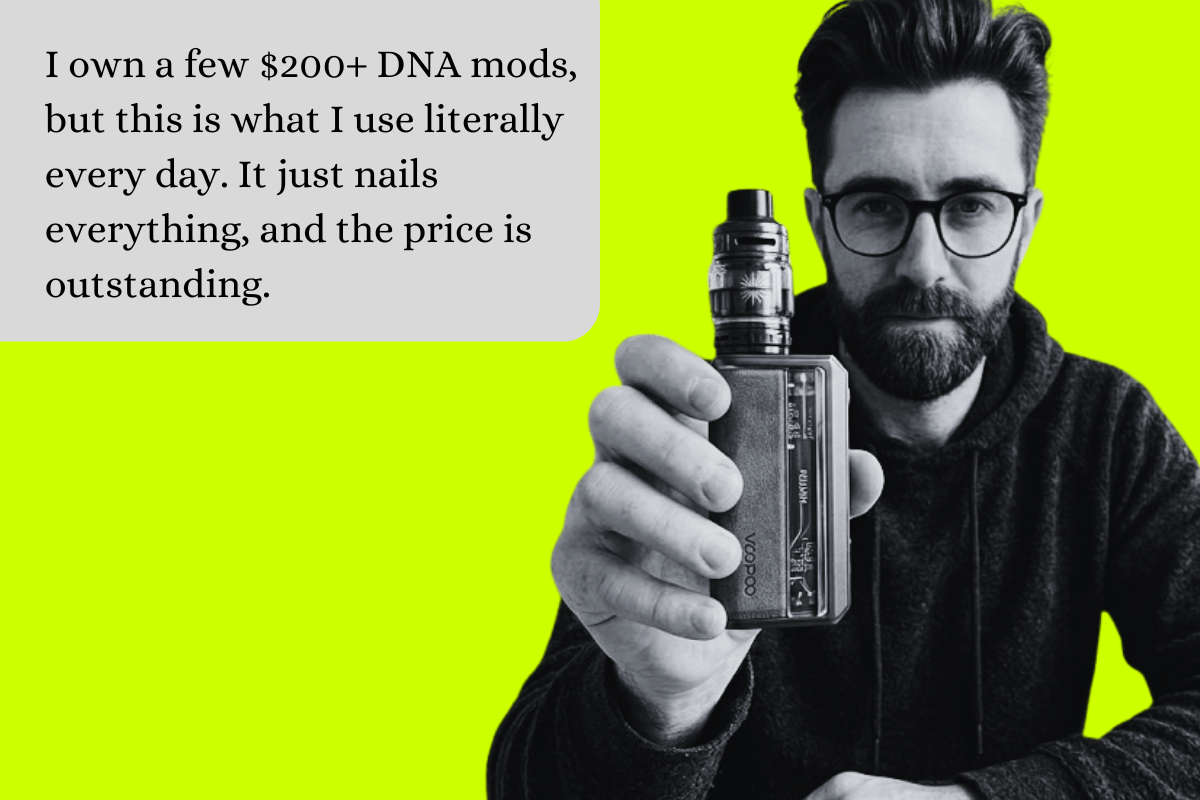
Some pod mods use removable coils and can run at the sort of power you’d expect from a smaller tank.
Treat the installed coil as the deciding part, not the word pod on the box.
A 60W-capable device does not mean every coil that fits it should be fired at 60W.
What Wattage Should I Use With a Vape Mod or Tank?
If you have a regulated vape mod and a tank, the mod supplies adjustable power. The tank’s installed coil tells you where to start.
Find the wattage marking on the coil body, box or manufacturer’s website.
For a replaceable coil, make sure you’re reading the number for the exact variant fitted.
One tank can support several very different coils.
If you’re choosing a new tank, our best vape tanks guide compares the current options.
As examples:
- Innokin lists its 1.2Ω Zenith MTL coil at 10–14W
- Innokin lists its 0.3Ω Zenith RDL coil at 30–40W
- Geekvape lists the Z 0.4Ω XM coil supplied with its Z Fli tank at 45–57W
These examples show how the same tank category can span a wide range.
A 200W mod doesn’t call for a 200W vape.
That’s its available output ceiling, not a recommendation.
I normally start a new factory coil at the lower end of its stated range and work upward until it tastes good.
If the flavour is already right at 55W on a 50–70W coil, I’d leave it there.
Nic Salts, Freebase and E-Liquid: Does the Juice Change the Wattage?
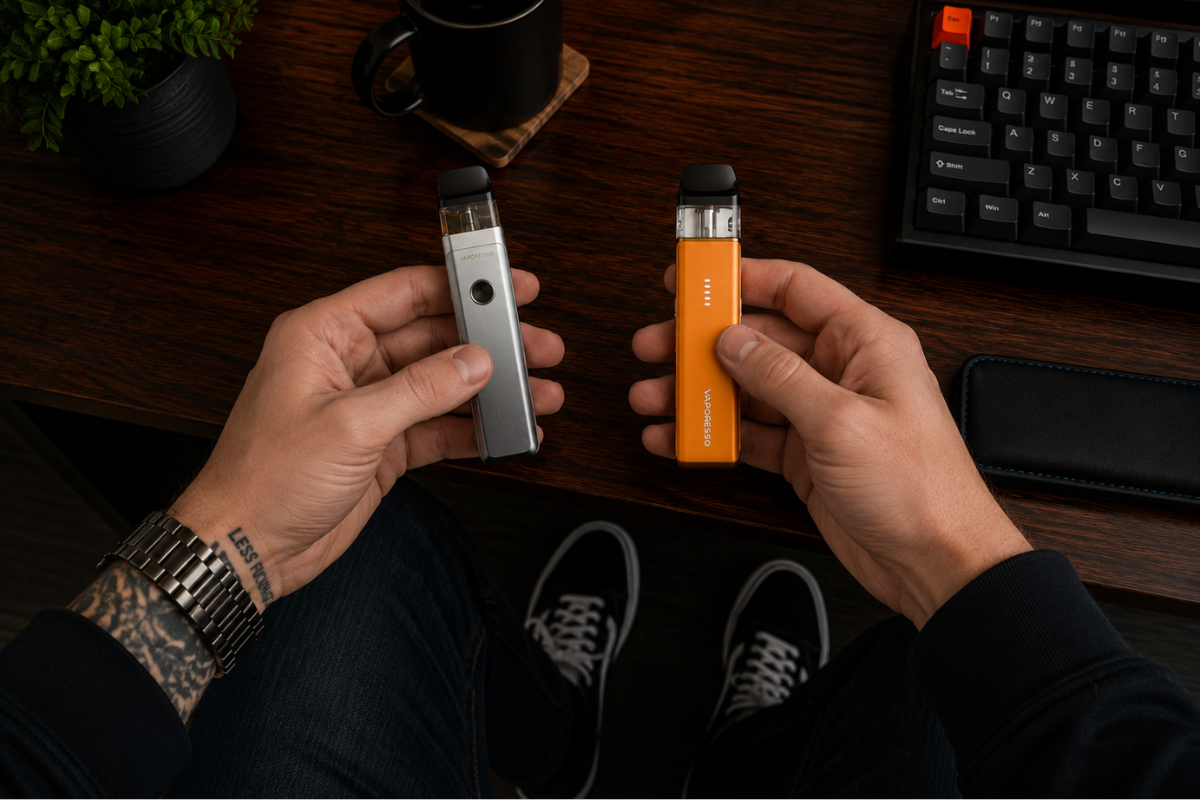
The coil rating still sets the power range.
The e-liquid helps you choose an appropriate coil and style of vaping in the first place.
Higher-strength nicotine liquids are usually more comfortable in a smaller-vapour MTL setup than in a powerful DTL tank.
An MTL pod with a tighter draw lets you use the sort of lower output that suits that style. A high-output tank vaporises substantially more liquid per puff, so keeping the same nicotine strength when you move from a small pod can feel far too strong.
If you change devices and the hit feels unpleasant, stop and check the liquid strength and device pairing. Simply lowering a sub-ohm coil below its rated power isn’t a good workaround.
Nicotine salt is a type of nicotine, not a wattage setting.
Our guide to freebase nicotine, nic salts and bar salts explains how the three formats differ.
OXVA even lists both salt and freebase e-liquid as compatible with some of its XLIM cartridges.
The liquid’s nicotine concentration, the coil and the amount of vapour you inhale matter more than a blanket rule that “salts must be below 20W.”
In the UK, consumer nicotine e-liquid is limited to 20mg/ml.
The PG/VG ratio also matters.
Many small MTL pods suit a thinner 50/50 liquid. Larger DTL coils are often designed for thicker, higher-VG liquid.
Check the manufacturer’s liquid guidance for your pod or coil.
Thick liquid in a coil that can’t wick it quickly enough can lead to dry hits, especially with repeated puffs. An unusually thin liquid in an open, high-power tank can cause other problems, including leaking.
Wattage cannot fix a poor liquid-and-coil match.
If you use a low-power refillable pod, the VapeBeat store’s vape juice section is built around pod-friendly nic salts and bar salts.
If you switched from smoking and the device isn’t satisfying, getting the right nicotine strength and device matters as much as getting the watts right.
The NHS vaping guide covers choosing a device and suitable nicotine strength.
How to Find the Sweet Spot Without Burning Your Coil
Prime the coil properly.
On a replaceable tank coil, follow the manufacturer’s instructions for wetting any exposed cotton.
On a sealed pod, fill it and allow the liquid to soak into the built-in coil. Don’t try to take the pod apart.
Innokin advises leaving a new coil for several minutes after filling, then starting at low power.
Read Innokin’s coil-change advice
Keep the liquid above the wick openings.
If you run the tank or pod almost dry, lowering the watts won’t give the wick any more liquid. Top it up before that happens.
Match the airflow to the setup.
A wide-open DTL tank and a tight MTL pod are doing different jobs.
Closing the airflow tightly on a high-power coil can make the vape hotter. Opening it can cool the draw.
Stay within the coil’s specified range and adjust the airflow as well as the power.
Give it a moment between puffs.
Repeated long draws can outpace the wick even when the wattage is technically within the printed range.
If the first puff tastes fine and the next one tastes dry, slow down, check the liquid level and consider turning the power down.
Don’t try to rescue a burnt coil by cranking up the power.
Once the wick tastes scorched, more heat usually makes it worse.
Refill it, let it rest and try a lower setting. If the burnt taste remains, change the coil or pod.
Troubleshooting: What Your Vape Is Telling You
| What you notice | Likely things to check | What to try |
|---|---|---|
| Burnt taste from the first puff | New coil not soaked, wrong power or low liquid | Stop, check the actual coil rating, fill it and allow it to soak. Replace it if the burnt taste remains. |
| Starts fine, then tastes dry | Wicking can’t keep up, repeated puffs, low liquid or thick liquid | Pause between draws, top it up, lower the power within the rated range and check liquid compatibility. |
| Weak flavour or thin vapour | Low power, restricted airflow, old coil or low battery | Check the rating and charge. Increase the power gently if adjustable and within range. Check the coil and airflow. |
| Too hot or harsh | High power, closed airflow or unsuitable nicotine strength | Lower the power within range, adjust the airflow and check the liquid strength. |
| Gurgling or spitting | Flooded coil, excess liquid, damaged seal or unsuitable liquid | Check the filling method and seals, clear excess liquid as the manual directs and confirm that you’re using the correct liquid. |
If the mod shows “short,” “check atomizer,” or a resistance reading that’s jumping around, stop firing it.
Inspect the coil fit and contacts, then follow the device manual. A wattage adjustment won’t repair a connection fault.
SMOK users can also check our guide to SMOK mod settings and common screen messages.
Do I Need to Use Temperature Control Instead?
Probably not for a normal pod or factory-coil tank.
Wattage mode, a pod’s built-in power setting or its simple power modes will cover most setups.
Temperature control is a separate feature found on some regulated mods. It requires a compatible coil material and the correct setting for that material.
You can’t assume every coil will work simply because the mod has a temperature-control menu.
Vaporesso, for example, identifies stainless steel, nickel and titanium modes for compatible coils in its documentation.
Follow the manuals for your specific coil and mod if you want to use temperature control.
Vaporesso temperature-control guidance
If you’re using a mechanical or unregulated device, or building your own coils, this beginner’s wattage guide isn’t enough to set it up.
There may be no wattage control or electronic protection to rely on. You need to understand the battery and build limits before using one.
Best Wattage for Vaping: Common Questions
Coil resistance alone does not tell you which wattage to use. Check the range printed on your exact pod or coil before changing the power.
The short answer: use the recommended range for your exact coil, start near the bottom and increase the wattage gradually until the flavour and warmth feel right.
What is the best wattage for a 0.8Ω coil?
There is no universal number.
Vaporesso lists 16W for its 0.8Ω XROS pod. OXVA lists 12–16W for an XLIM 0.8Ω cartridge, while Innokin lists 14–17W for its 0.8Ω Z KAL coil.
Find the rating for the exact coil you have, then start at the lower end if your device allows adjustment.
What is the best wattage for a 0.4Ω coil?
It depends even more heavily on the coil design.
Vaporesso lists 25W for the XROS 0.4Ω pod. OXVA lists 26–30W for its XLIM 0.4Ω cartridge. Geekvape lists 45–57W for the Z 0.4Ω XM tank coil.
A generic 0.4Ω wattage chart can get this badly wrong.
Is 20W high for a vape?
For some small MTL pods, yes.
For an XLIM 0.6Ω cartridge, 20W is the bottom of OXVA’s listed 20–25W range. For a 50–60W sub-ohm coil, 20W is too low to provide its intended performance.
The coil decides.
Does higher wattage mean more flavour?
Only up to a point.
Raising the power within the coil’s recommended range may make the flavour fuller. Push it too far and the liquid can taste overheated or burnt.
Airflow, e-liquid and coil condition also affect flavour.
Does lower wattage make coils last longer?
Running near the lower end of a coil’s recommended range often puts less demand on its wick and uses less e-liquid than running at the top.
Coil life also depends on the liquid, how often you vape and whether you allow a new coil to soak before using it.
Do not run the coil so low that the device barely vaporises the liquid simply to make it last longer.
What if my vape sets its wattage automatically?
Use the correct pod or coil and let the device do its job.
If it offers modes such as Eco, Normal and Boost, choose the one that gives you a comfortable draw.
You do not need to override an automatic setting using a generic online resistance chart.
Should I use 20mg nicotine salts at 60W?
That pairing can produce far more nicotine-containing vapour per puff than a small MTL pod and may feel much too strong.
Use a device and liquid strength suited to one another, and follow the coil’s recommended range.
My Rule of Thumb
Read the coil, not the maximum number on the mod.
Start near the low end of the manufacturer’s range, get the wick properly soaked and move up only while the vape gets better.
For an automatic pod, pick the correct pod and let the device handle the power.
If the vape feels wrong, check the coil, liquid and airflow before chasing another wattage number.