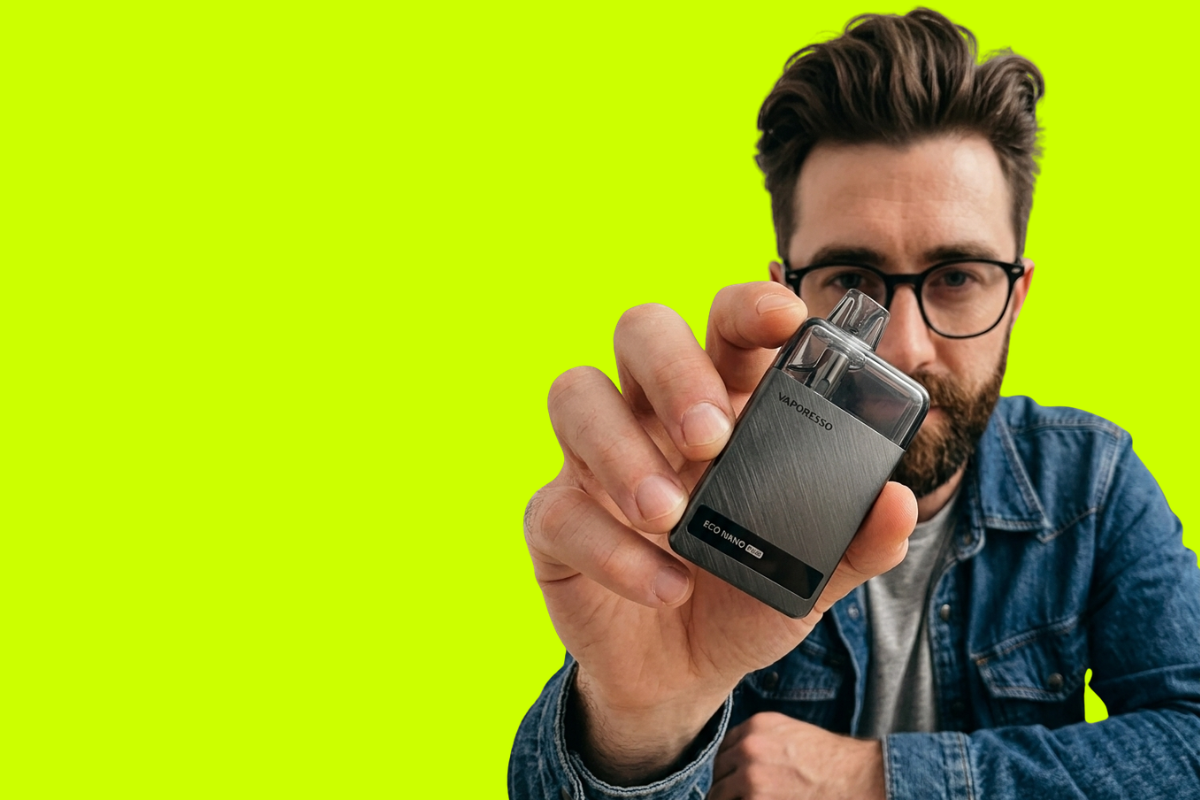


TL;DR: The DaVinci EQ is worth considering if you want a water-cooled home rig with a replaceable quartz bowl and proper temperature controls.
I’m a simple man. I don’t need a Pro Max iPhone and I found the cheaper Davinci EQ Skyrise more than enough for my needs.
It’s powerful, simple to use, and the flavor is great, easily on a par with my PuffCo Peak Pro. I love the quartz flavour, the less-mess water cooling and the simple AF on-device controls.
But if you want to GO LARGE, the Jacuzzi is a much more complete setup with respect to performance and hit-quality, and it also looks totally badass as well. I actually really love its weird, squat design.
- Best-value package: EQ Skyrise at $349.
- Full package: EQ Jacuzzi Collection at $499.
- Main strengths: Quartz crucible, touchscreen controls, programmable temperatures and replaceable heating parts.
- Main drawbacks: Internal batteries, regular cleaning and a quartz setup that rewards technique.
- Worth knowing: Separate $69.95 Halo heaters add ceramic concentrate heating or dry-herb support (you don’t need these though)
My take after testing both?
- The more affordable Skyrise is the EQ I’d consider first; it’s powerful, has a replaceable heater, and it kicks out outstanding flavor. It’s also dead easy to use.
- Spend the extra on the Jacuzzi package if you actually want its larger glass, zirconia accessories and carrying case.
I’ve always liked the way DaVinci designs its products. The focus is always on great materials, simple controls, and great performance.
Yes, they’re on the pricier side. But I don’t mind paying extra for stuff when it looks great and works seamlessly, usually for years and years at a time.
The EQ brings some of that thinking to the world of electric dab rigs, and after testing out the EQ rig I have to say, once again, I’m pretty impressed.
And because this is an electric dab rig (sometimes called a smart rig), there’s no messing around with butane and torches. The built-in heater warms the bowl, vapour passes through water, and you control the session through a touchscreen on the base.
There’s also no app required to use it, either. As I covered in my DaVinci IQ3 review, I’d much rather control a vaporizer directly than make my phone part of the process.
But the EQ has to do more than look expensive and offer a nice screen. At this price, the actual session needs to justify the hardware and inside the EQ range there are two options to consider:
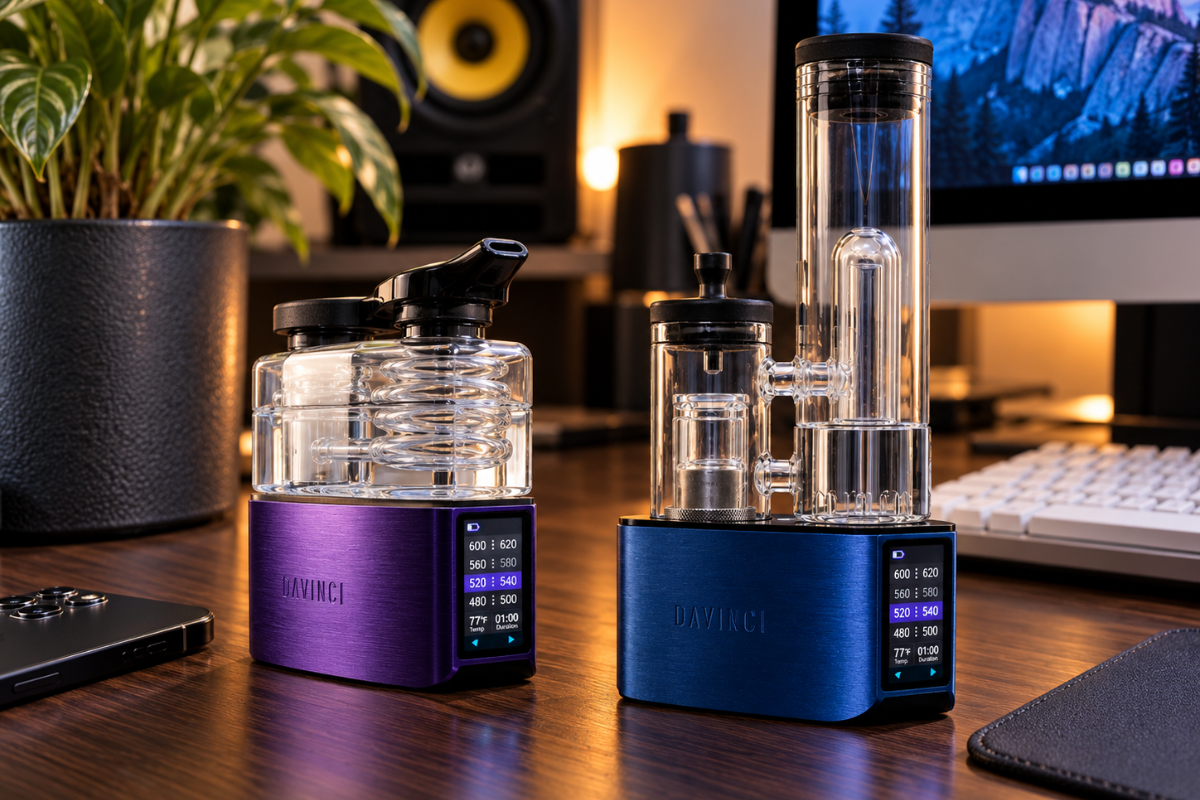
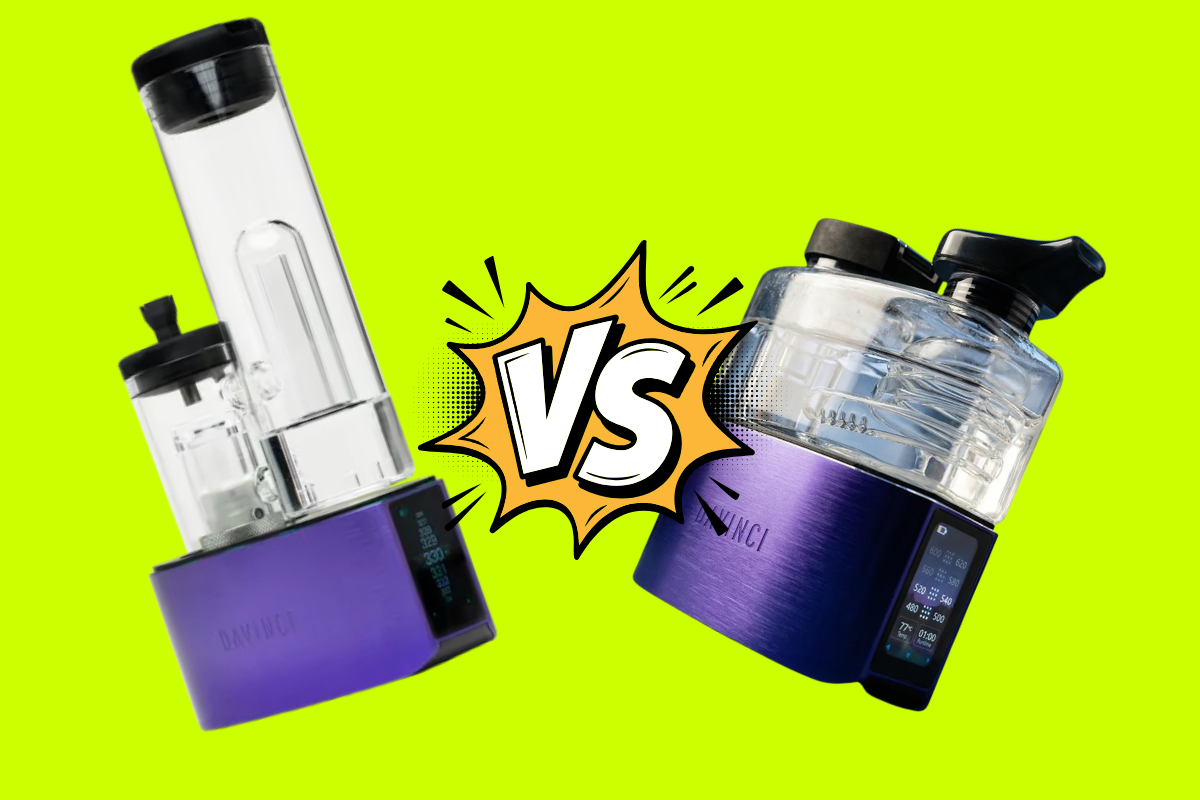
- The Skyrise (the cheaper option; on the right) which would be my personal preference.
- And the Jacuzzi (the full package; pictured on the left)
Let’s start with the one that’s likely to be the most popular: the more affordable DaVinci EQ Skyrise
There are two main quartz packages, and the difference is mostly the accessories.
| Feature | EQ Skyrise | EQ Jacuzzi Collection |
|---|---|---|
| Current US price | $349 | $499 |
| Core base and quartz heater | Same platform | Same platform |
| Glass bubbler | 30ml | 60ml |
| Mouthpiece | Silicone | Zirconia |
| Carb cap | Silicone | Zirconia |
| Travel case and full cleaning kit | Not listed in the basic package | Included |
The Jacuzzi Collection (picture below) costs another $150.
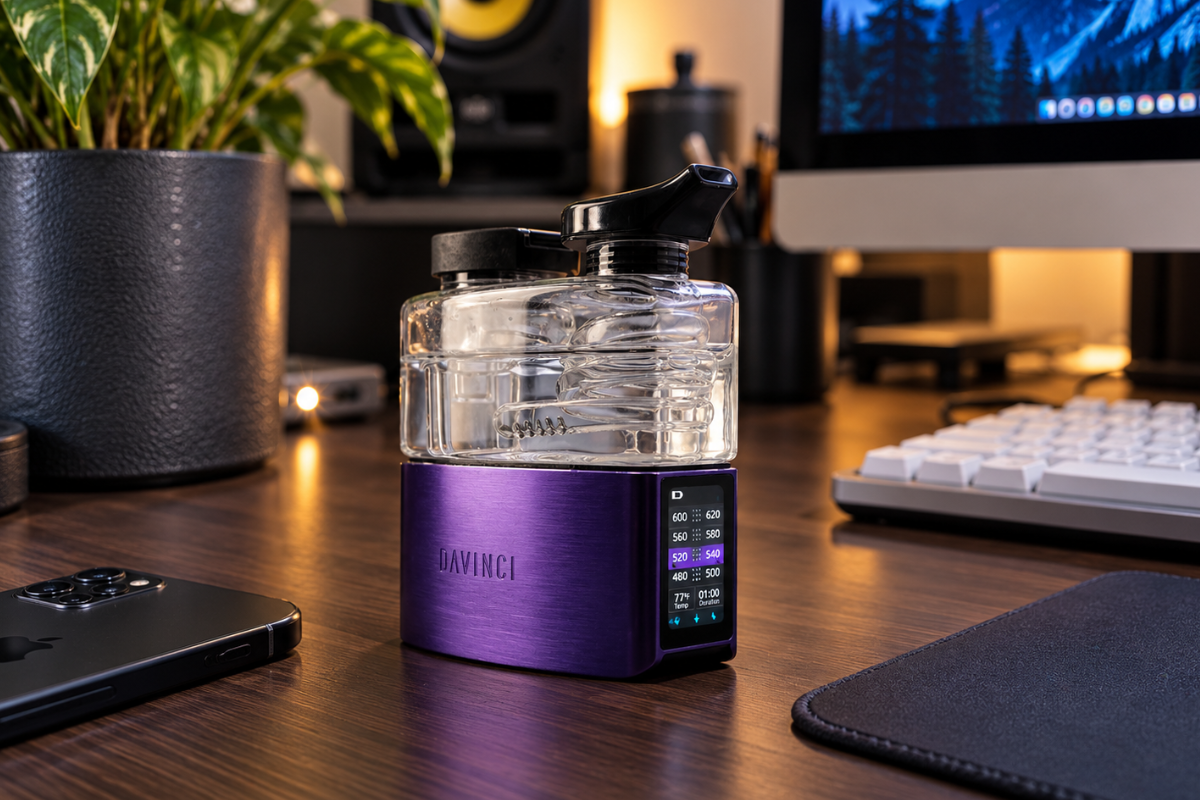
You get a bigger bubbler, upgraded mouthpiece and carb cap, a loading tool, cleaning supplies and a travel case. Those are useful additions, but they don’t turn the base into a more powerful device.
That’s why I’d start with the Skyrise. For more people, myself included, the Skyrise has everything you need for rock-solid, at-home dab sessions.
If you want the larger glass and the full accessory package, fair enough. The Jacuzzi setup makes sense if you’re more into bigger sessions, bigger bubblers and don’t mind splashing the cash.
If you mainly want the EQ’s quartz heater and touchscreen controls, the cheaper package gets you those.
The replaceable quartz bowl is the main attraction.
The original EQ uses a quartz crucible that sits on a separate heater.
You can see the concentrate melt, see what remains after the session and remove the bowl for cleaning or replacement.
I like that separation.
If you damage the crucible, you don’t necessarily need a whole new heater. If the heater fails, you can replace that part without buying another base or bubbler.
The current parts collection lists the quartz crucible at $21 and the matching heater at $44. That makes the ongoing costs easier to understand than a system where everything is permanently joined together.
There’s also an optional zirconia crucible if you want a different insert material.
Just keep the construction claims sensible. The EQ has quartz, glass, ceramic and other components depending on the package. “Replaceable quartz crucible” tells you more than a vague promise about an entirely quartz device.
Flavour is the appeal. Small-load extraction is the question.
The original quartz setup makes the most sense for someone who enjoys taking their time with concentrates.
Lower-temperature sessions can deliver smooth, clear flavour. The water cooling and quartz contact surface are a big part of the attraction.
But flavour and extraction aren’t the same thing.
The bottom-heated quartz arrangement can produce lighter vapour from smaller loads, especially at lower settings. Temperature, loading method and how you use the carb cap all affect the result.
That’s the part I’d pay attention to before buying.
If you want to drop in a tiny dab and get dense vapour with minimal adjustment, the EQ’s original configuration isn’t an automatic recommendation.
I wouldn’t solve that by simply loading more concentrate every time. A premium rig should suit the amount you normally want to use.
The Halo concentrate heater is a separate option.
DaVinci now sells the Halo Heater: Concentrate for $69.95.
This combines the bowl and heater into one ceramic component and adds sidewall/surround heating. It changes both the heating arrangement and the surface your concentrate touches.
That gives you a different buying decision:
| Heater | Main appeal | Main trade-off |
|---|---|---|
| Original quartz system | Visible bowl and a separately replaceable quartz insert | Bottom heating can require more technique |
| Halo concentrate heater | Ceramic bowl with sidewall/surround heating | Extra cost; bowl and heater form one component |
The Halo is aimed at a limitation of the original design. But I wouldn’t assume it automatically makes the EQ better than every competing rig.
It needs to earn that claim through performance.
It also changes the price. A $349 Skyrise plus the $69.95 Halo concentrate heater comes to $418.95 before any other charges. That’s the configuration price to compare if the Halo is the part you actually want.
The touchscreen is a proper feature, not just decoration.
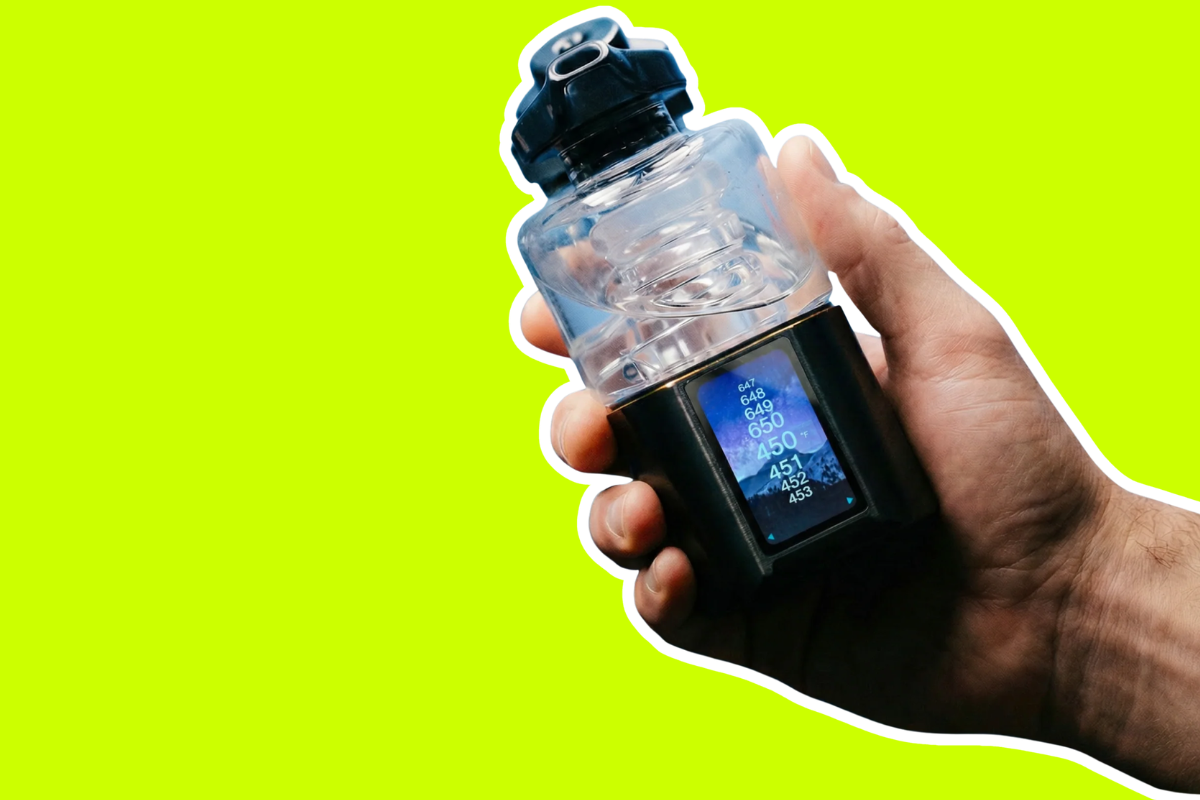
The EQ lets you select temperatures from 450°F to 650°F, adjust session timing and see what the device is doing.
There are two main modes:
- Precision Temperature: Holds your chosen setting.
- Smart Paths: Gradually raises the temperature through a programmed range.
The default concentrate paths are:
| Smart Path | Temperature range |
|---|---|
| Terpene | 480–500°F |
| Flavor | 520–540°F |
| Clouds | 560–580°F |
| Atomic | 600–620°F |
You can adjust and rename the paths directly on the device.
That’s useful if you like starting lower and finishing hotter without stopping to change the temperature manually.
There are lighting and theme options too. Fine, have a play with them. But the useful part is being able to control temperature and session time without memorising a collection of coloured lights.
Loading and carb-cap technique matter.
The standard quartz setup supports both cold starts and hot starts.
- For a cold start, load the crucible before heating.
- For a hot start, bring the bowl up to temperature first and then add the concentrate.
The carb-cap injector directs air into the bowl and helps move the concentrate towards the heated area. It’s designed to be moved gently during inhalation.
That’s worth learning rather than treating the cap as a lid you close and forget.
You can also extend an active session with the command button. Timing is customisable, so there’s room to adjust the session to the load.
My advice would be to make one change at a time. Keep the load consistent, get familiar with one temperature and then adjust from there. Otherwise, it becomes difficult to work out what helped.
Battery capacity is decent. Battery replacement is the disappointment.
The EQ uses two internal 3,000mAh cells, charges through USB-C and supports use while plugged in which is great because it means you’re not reliant on the internal cells. I always forget to charge my devices, so pass through is a life saver and an excellent addition here.
A full charge takes approximately two to three hours.
DaVinci says you’ll get about 50 sessions off a full charge. Now, that’s a very big ballpark figure. I use mine intermittently, so I’m not using it for hours and hours and hours at a time. As always, mileage varies depending on how you use things, but I will say this: the battery life is really, really solid.
I’ve never been in a position where I’ve been like, “Oh, I’ve got to hurry up because the battery’s going to go.” There always seems to be loads of juice left, even after a few sessions or five sessions.
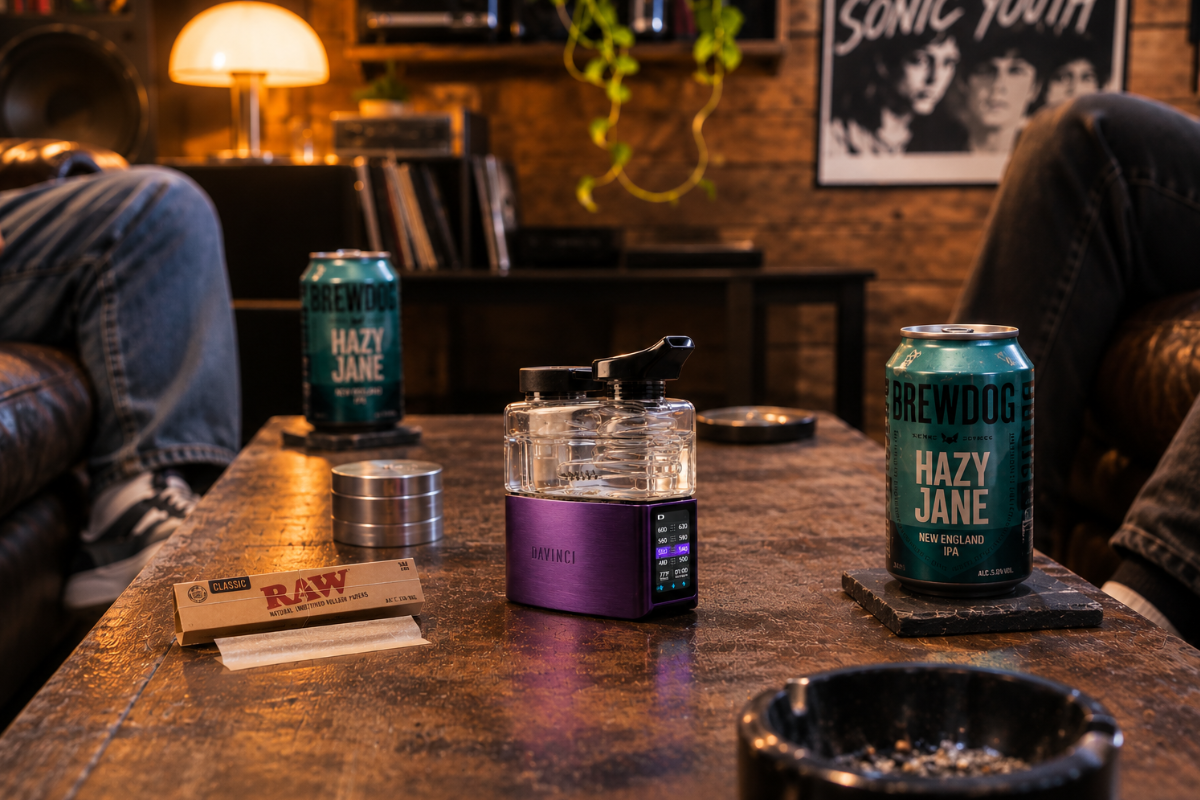
For instance, on most Friday or Saturday nights, if I take it around to my friend’s house, we will sit down, chat, have some drinks, use the EQ intermittently for 4 or 5 hours at a time.
Sometimes when I go home, it’s still got 60% or 40% battery left, which is really impressive for a device that is kind of portable.
It’s designed to be portable, but it’s a step up from the Puffco Proxy in size. I’d call it a hybrid portable and desktop rig: easy enough to take with you, but just as suited to sessions at home. Battery life has been really good, too. I’ve been using it for well over two months now, and I’ve got no complaints on that front.
Add in the fact that it has replaceable heating parts, and you’re basically looking at a device that, if you look after it well, will probably last you for the next decade or so
This is a home rig that can travel.
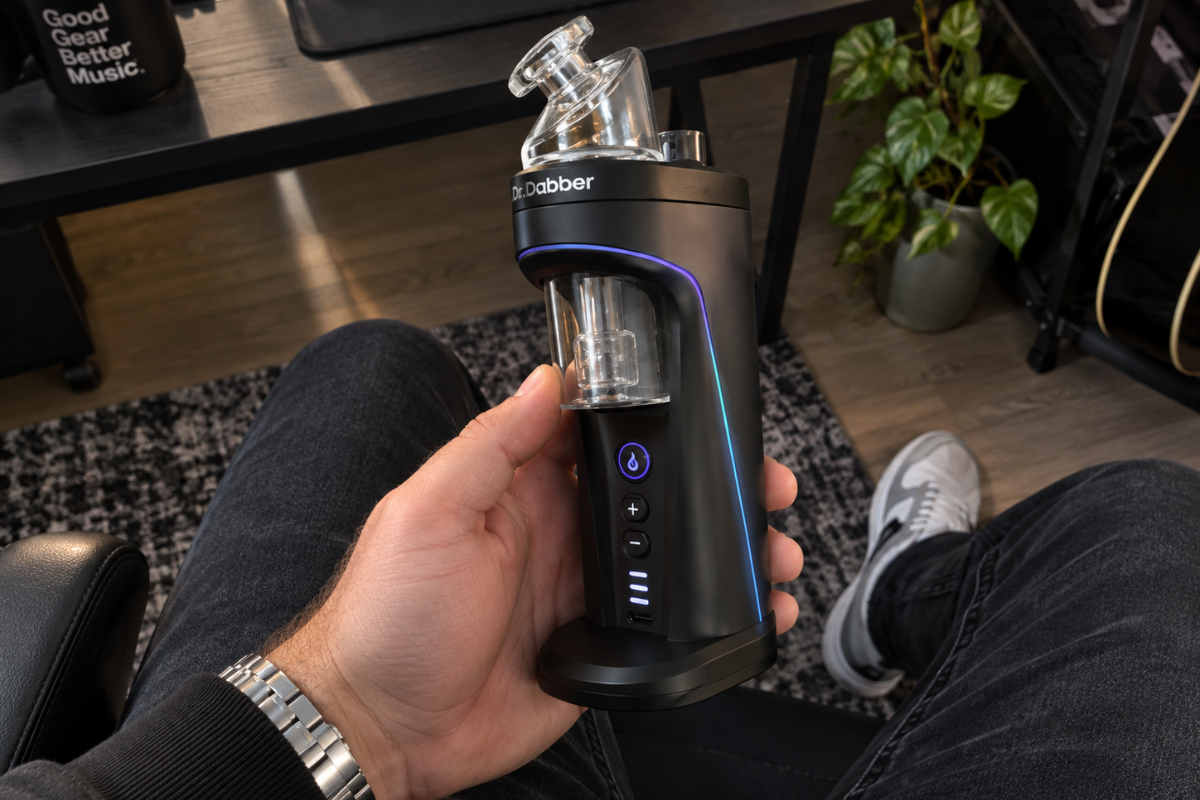
As I touched on in the last section, this device is portable, but it’s most at home as a desktop-style rig. You’ll need to take it apart for travel and reassemble it when you arrive, but it fits in a backpack without taking up too much room.
I take it out with me sometimes, and it’s much less of a pain in the ass to carry than my Dr. Dabber Switch 2, which is massive (as you can see in the picture above).
If you want a rig mainly for home use that you can also take to parties, a friend’s house, or a weekend away, this is well worth a look. It handles both roles really well, provided you don’t mind a little setup when you get there.
The Jacuzzi package includes a protective case, so moving it between locations is practical. But it’s still a setup you unpack, assemble and use somewhere suitable.
I’d think of it as a rig for your desk or living room that you can take elsewhere when needed.
If you mainly want something for short sessions while you’re out, you’re looking at a different type of device. And if you use prefilled cartridges, the DaVinci ARTIQ is the relevant model in the range.
Cleaning needs to become part of the session.
The quartz crucible needs attention after use. If you neglect it all that happens is it gets gunked-up and doesn’t work as well. Leaving residue to bake onto the bowl makes the next clean harder and does the flavour no favours.
By dodging the cleaning, all you’re doing is creating headaches for your future self. Bite the bullet and just clean it regularly, it’ll help the EQ last longer and perform better.
Here’s my usual cleaning routine for the rig:
- Swabbing the crucible after a session once it has cooled to a suitable warm temperature.
- Cleaning residue from the carb cap and surrounding surfaces.
- Replacing the bubbler water.
- Periodically cleaning the glass.
- Keeping the heater connection clean.
The detachable parts help with access, but there are several pieces to maintain.
- Remove the bubbler before filling or cleaning it.
- Keep liquid out of the electronic base, and don’t submerge the heater.
Dry-herb support requires another heater.
There’s now a dedicated Halo Heater: Dry Herb, also priced at $69.95.
That adds flower support to the EQ base, but it doesn’t mean you should put flower into the standard concentrate crucible.
The dry-herb heater has its own ceramic heating arrangement and operating requirements. Don’t carry the concentrate temperature range across and assume it applies to flower.
Some older EQ bases may also need updated firmware. DaVinci lists a free upgrade/replacement-base process for eligible units, so check compatibility before ordering either Halo heater.
The ability to use one base for different materials is appealing, especially since Dr Dabber all but nixed this functionality on the Dr Dabber Switch 2.
You still have to buy it separately, so it’s not like it comes with the kit and adds value to it immediately. In my experience with it, it’s good, but it’s not as good as a dedicated desktop vaporizer or a really good portable vaporizer like the DaVinci IQ3 or the Mighty Plus, for instance.
Would I buy the DaVinci EQ?
Which Should You Buy?
- The more affordable Skyrise is the EQ I’d consider first; it’s powerful, has a replaceable heater, and it kicks out outstanding flavor. It’s also dead easy to use.
- Spend the extra on the Jacuzzi package if you actually want its larger glass, zirconia accessories and carrying case.
I’m a simple man. I don’t need a Pro Max iPhone and I found the Skyrise more than enough for my needs. It’s powerful, simple to use, and the flavor is great, easily on a par with my PuffCo Peak Pro. I love the quartz flavour, the less-mess water cooling and the simple AF on-device controls.
For a first-time electric dab rig, I honestly don’t think you could go wrong with one of these. They’re both cheaper than the Dr Dabber Switch 2, and while there are caveats versus that rig, for the basics done well, both are really exceptional dab rigs in their own regard.
The replaceable crucible and heater are both thoughtful additions too, as is being able to change the glass or add another heater without replacing the entire rig. Again, DaVinci’s focus on NOT making single-use products is another reason I’m a big fan of the brand.
But the EQ you go for needs to suit your sessions. You’re probably different to me; again, I found the cheaper Skyrise more than enough for my usage.
But if you want to GO LARGE, the Jacuzzi is a much more complete setup with respect to performance and hit-quality, and it also looks totally badass as well. I actually really love its weird, squat design. It sits perfectly on a table and it’s built like a tank too.