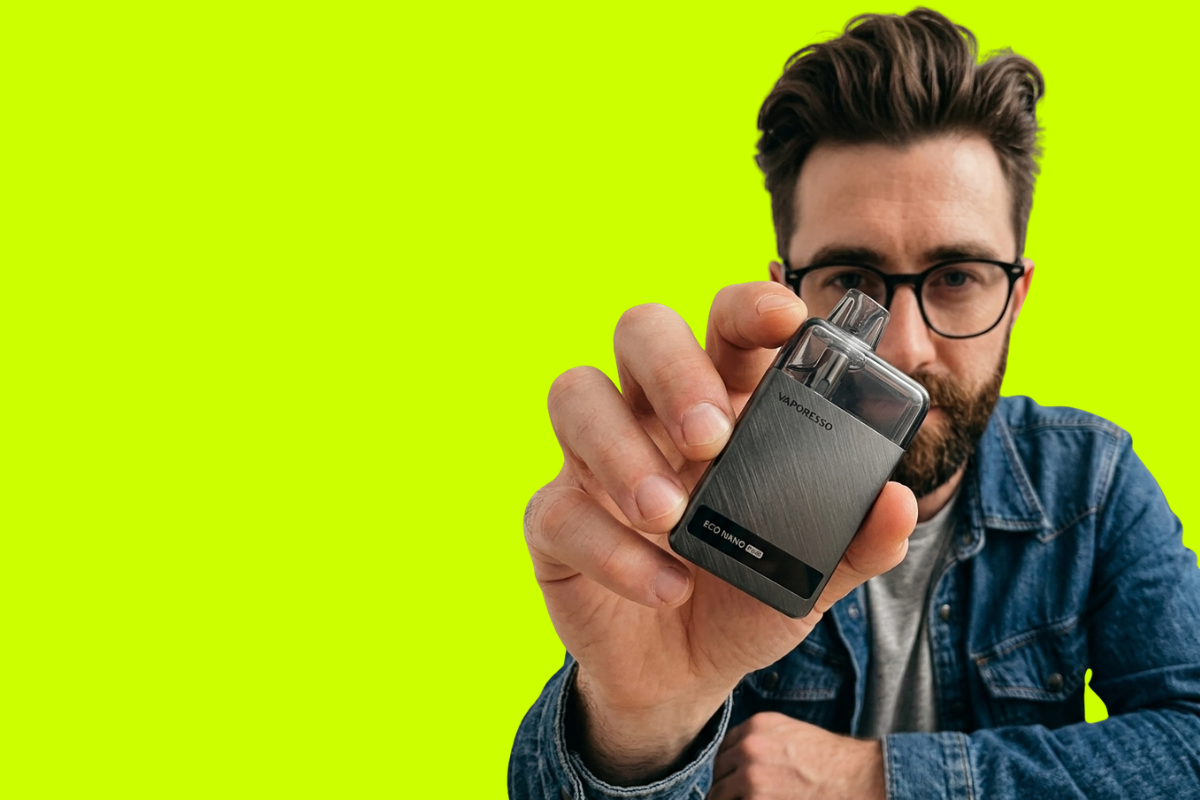




Two CBD vapes can have the same number on the box and still be very different products. The extract may come from different suppliers, the lab reports may cover different things, and the hardware can change how the oil actually vapes.
So what should you ask a brand once you’ve looked past the CBD strength? We put those questions to an actual expert and someone with skin in the game: Sean from Originals CBD, starting with the thing most people notice first.
VapeBeat: Everybody puts the CBD strength front and centre. What does that number not tell me?
Sean: Quite a lot, actually. Say you’ve got a vape marked 1,000mg CBD. Fine, that tells you how much CBD it’s meant to contain. But where did the extract come from? Are there other cannabinoids in there? What did the lab check? What’s giving it the flavour, and what’s heating the oil? The number doesn’t answer any of that.
You could put two 1,000mg vapes side by side and find they’ve got completely different ingredients and hardware. So we look at the whole pen. I wouldn’t use the number on the box as a quality score.
VapeBeat: Where do you start when you put a pen together?
Sean: I tend to break it down into four things: the cannabinoid extract, the testing behind it, the terpene blend and the hardware. You need all four to work together.
You can put really good distillate in a poor pod and still end up with a frustrating vape. Equally, a well-made pod doesn’t tell you much about the oil inside it. We source the components separately, work out the formulation and fill the devices ourselves. That way, we’re making those decisions rather than buying a finished white-label pen.
VapeBeat: Why use a distillate with several cannabinoids instead of CBD isolate?
Sean: There’s nothing wrong with isolate. If you want very pure CBD and precise control over the CBD level, it’s a sensible ingredient. We just wanted a wider cannabinoid profile for this formulation.
The raw material in our documentation is a US-made crystal-resistant distillate. So you’ve got CBD, a substantial amount of CBG and smaller amounts of other cannabinoids. It’s also been developed to resist crystallising, which matters when the oil’s sitting in a pod and needs to keep moving towards the heating element.
I’m not saying that more cannabinoids automatically make a better vape. What matters to me is that we can tell you what’s in the ingredient we’re using.
More CBD Vape Guides, Reviews & Advice
Learn more about CBD vapes, ingredients, effects, safety, dosing and choosing the right CBD products for your needs.
Loading the latest CBD articles…
VapeBeat: What’s actually on the lab report for that distillate?
Sean: The July 2026 certificate for the raw material identifies lot L2607B020. That batch came back at 47.9% CBD, 20.141% CBG and 74.5% total cannabinoids. The report also lists CBDV and CBE, plus smaller measured amounts of CBC and CBN. Delta-9 THC was 0.0613% in the raw ingredient; THCA and delta-8 THC weren’t detected on that report.
I do want to be clear about that: those numbers are for a particular batch of starting material. They’re not the cannabinoid breakdown of every finished pod. For that, you’d want the certificate and label for the finished product and its own batch.
VapeBeat: When a CBD company says “lab tested”, what should I ask next?
Sean: I’d ask, “Tested for what?” A cannabinoid result is useful, of course. But does the report also check for pesticides, heavy metals, residual solvents, mycotoxins or microbes? You can’t tell from a “lab tested” badge.
The certificate we supplied for this distillate covers those panels as well as potency, and the tested batch met the specifications listed on it. That’s the kind of detail I want to see behind the claim.
VapeBeat: Does the report go into the detail a buyer can actually check?
Sean: Yes, and this is where the report gets more useful. On the microbial side, it checks for Salmonella, Shiga toxin-producing E. coli, total coliforms, total aerobic count, and yeast and mould. Salmonella and that E. coli group were reported absent in the tested samples. The other results were within the report’s limits.
It goes further than that. You’ve got arsenic, cadmium, lead and mercury listed, plus individual pesticide and mycotoxin tests. The solvent panel covers things like benzene, hexane, ethanol and isopropyl alcohol. Isopropyl alcohol was measured at 26.20ppm, below the certificate’s 1,000ppm limit.
That doesn’t mean “zero of everything”. And a pass on the raw material isn’t a test of the finished pen. What it does mean is that you can see what was checked, what was found and what limits the lab used.
VapeBeat: What about the flavour? Is this meant to taste like ordinary vape juice?
Sean: No, that’s not really what we’re going for. We want a cannabis-style aroma, not something that tastes like a sweet nicotine disposable. The material we supplied describes cannabis-derived terpenes from US suppliers, chosen for that sort of profile.
And, look, botanical terpenes can be good too. I’m not saying a botanical blend is automatically poor. It comes down to the flavour you’re trying to make and whether you’re clear about where it comes from. You don’t necessarily improve it by piling in more terpenes. It’s about getting the balance right.
VapeBeat: Why make such a big deal of the hardware?
Sean: Because what’s inside isn’t ordinary PG/VG e-liquid. Cannabinoid distillate can be much thicker. The pod has to get that oil to the heater and vaporise it consistently. If it doesn’t, you can end up with clogging, weak draws, leaks, burnt flavour or oil left behind. Nobody wants to buy a pod and find there’s still oil in it that they can’t use.
We chose CCELL Eazie hardware. It uses a ceramic heating element intended for concentrated oils. I think it’s fair for people to ask who’s making the hardware, and we can tell them. Of course a pod can still clog or fail. But naming the platform tells you a lot more than putting “premium hardware” on a product page.
VapeBeat: You also say the pens are made in-house. What does that mean in practice?
Sean: It means we choose the cannabinoid ingredient, the terpene profiles and the hardware separately. Then we put the blend together and fill the devices ourselves. We don’t take a completed white-label vape and just change the packaging.
So if you ask us about a pen, we can trace it back through the ingredient batch and its lab documentation, then through the formulation and filling. That doesn’t mean every contract manufacturer is bad, or that white label automatically means a poor product. We just wanted direct control over those steps.
VapeBeat: If somebody has 30 seconds to check a CBD vape before buying, what should they look for?
Sean: First, check the ingredient list and the cannabinoid breakdown for the finished product. Then look for a batch-specific lab report. Does it cover contaminants, or just potency?
Then find out what’s giving it its flavour, who made the pod or cartridge, and whether the battery is rechargeable or replaceable. If the seller can’t tell you what’s in the pod or who made the hardware, a big CBD number isn’t going to answer those questions for them.
VapeBeat’s take: That’s the useful way to shop for a CBD pen. The strength matters, but the batch report, formulation and hardware tell you far more about what you’re actually buying. You can see Originals CBD’s current vape range here, then compare the information for the specific pen and batch you’re considering.