



You’re standing at the counter staring at a wall of disposables. Every package screams “92% THC” or “premium live resin” or some version of both. Half cost twelve bucks. The other half cost sixty. The labels look almost identical.
That price gap isn’t random. It’s buried in details most brands are counting on you to skip.
Here’s what’s actually on the package, what’s missing from it, and why it matters.
The Big Number on the Front Is Mostly Noise
“92% total cannabinoids” sounds impressive until you understand what it actually means.
Total cannabinoids isn’t the same as active THC. This is why I tend to prefer old school methods; specifically flower and a good-quality vaporizer. You just know where you’re at with this setup.
Brands love quoting that headline figure because it bundles together inactive precursors, minor cannabinoids, and a healthy dose of measurement padding.
It’s the biggest number they can legally put on the front, so that’s what goes on the front.
What you actually want is the breakdown. Look for individual percentages:
- Delta-9 THC, Delta-8, THCA, CBN, CBG. A label showing “85% total cannabinoids” with zero breakdown is hiding something.
- A label showing “60% Delta-9, 15% THCA, 8% CBN, 4% other minors” is being straight with you.
THCA is worth understanding here too. It converts to Delta-9 when heated, so a high-THCA product can genuinely hit hard. But only if the device gets hot enough to fully decarboxylate it. Cheap coils often don’t.
Quick rule: one big number with no breakdown? Assume the rest is filler.
Fun Fact: THCA (tetrahydrocannabinolic acid) is technically non-psychoactive in its raw form. It only becomes the Delta-9 THC that gets you high when it’s exposed to heat, which is why your vape’s coil quality matters more than most brands admit.
Terpenes Are Where the Real Price Difference Lives
This is the section that actually explains why one disposable costs five times more than another.
Terpenes drive both flavor and the entourage effect, and brands source them two ways. Cannabis-derived terpenes are extracted directly from the plant. Botanical terpenes are lab-blended from non-cannabis sources like orange peel, pine, and cloves. Botanical terpenes are cheap.
They taste roughly like the strain they’re imitating, but they lack depth.
Cannabis-derived terpenes, especially live resin (where the plant is flash-frozen immediately after harvest to preserve volatile compounds that normally evaporate during drying), cost significantly more to produce and taste like the actual strain.
Here’s the problem: most labels won’t tell you which one you’re getting.
If a disposable doesn’t say “cannabis-derived terpenes” or “live resin” anywhere on the package, it’s almost certainly botanical. Not always bad, but you should know what you’re paying for before you hand over your money.
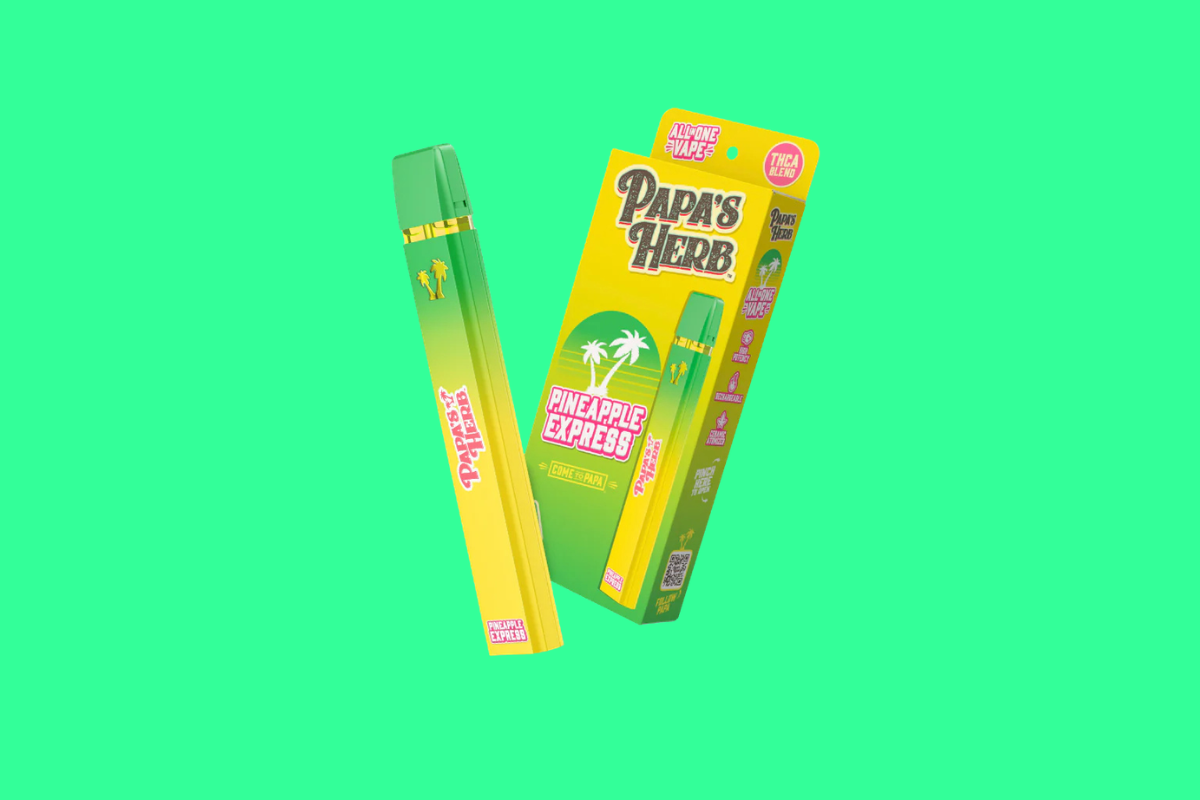
At the higher end of the category, disposable vapes with live resin and THCA diamonds tell you exactly what‘s inside – the live resin part covers terpene preservation, and the diamonds give you a measurable THCA spike instead of vague potency claims.
That combination is exactly why those products cost what they cost.
What Else Is in There? Check the Cutting Agents
This is the part brands really don’t want on the front of the package.
Cutting agents thin out the concentrate so it flows through the coil properly. Common ones include PG (propylene glycol), VG (vegetable glycerin), MCT oil, and PEG. None are catastrophic in small amounts.
But they’re not cannabinoids, which means a “92% cannabinoid” claim and a long cutting agent list cannot both be honest at the same time.
The one to actively avoid: vitamin E acetate. It was the primary culprit in the 2019 EVALI lung injury outbreak that hospitalised thousands of people. Reputable brands eliminated it years ago, but it keeps turning up in black-market carts and gas station products.
A clean disposable should list nothing beyond cannabinoids and terpenes, or disclose what’s in there and explain why. If the ingredients list is absent entirely, that’s your answer.
Fun Fact: The 2019 EVALI (e-cigarette or vaping product use-associated lung injury) outbreak was linked almost entirely to illicit THC cartridges using vitamin E acetate as a cutting agent, not to legal, regulated cannabis products. The CDC confirmed this in early 2020.
Strain Names Are Mostly Marketing
Let’s be real: “Blue Dream” on one disposable doesn’t mean the same genetics as “Blue Dream” on another. In the hemp space, strain names function more as flavor and effect shorthand than any kind of verified lineage. Two different brands can put the same name on completely different products.
What matters more than the name is the terpene profile listed underneath it.
Myrcene-dominant profiles skew relaxing and sedating. Limonene-dominant runs uplifting and cerebral. Caryophyllene-heavy hits the body and can work well for stress. Two disposables both called “Wedding Cake” with different dominant terpenes will feel like different products, because they are.
If the package gives you a strain name and nothing else, you know less than you think you do. If it gives you a breakdown of the top three or four terpenes, you know exactly what you’re buying.
The COA Is the Label That Actually Matters
The Certificate of Analysis is the document you should care about more than anything printed on the box. Every legitimate brand publishes one, usually via QR code on the packaging or via batch number lookup on their website.
The COA shows third-party lab results for that specific production batch: full cannabinoid breakdown, terpene profile, pesticides, heavy metals, residual solvents, microbials. If a brand doesn’t publish a batch-specific COA, that tells you everything you need to know about whether to buy from them.
One thing worth checking: make sure the batch number on the package matches the one on the COA. Some brands post a generic “we test our products” page with no batch-specific data. That doesn’t count. Batch-specific, third-party verified results are the standard, not a bonus.
How to Read a Cannabis Disposable Label in 90 Seconds
Once you know what to look for, this genuinely takes under two minutes.
Skip the front. Ignore the big cannabinoid percentage and the strain name. Go straight to the back or side panel and look for four things:
- The cannabinoid breakdown. Individual percentages, not one headline number.
- The terpene source. Does it say cannabis-derived, live resin, or botanical? No disclosure means botanical.
- The ingredients list. Anything beyond cannabinoids and terpenes? Find out what it is and why it’s there.
- The COA access. QR code, batch number, or website URL. If none of these are present, put it back.
Brands that hide information tend to hide it in the same predictable places every time. Knowing where to look makes the decent products easy to spot, even in a shelf full of identical-looking packages.
Wrapping Up
A cannabis disposable label tells you a lot if you know which numbers to ignore and which questions to ask. Skip the headline cannabinoid figure, find the breakdown, identify the terpene source, check for cutting agents, and verify there’s a COA you can actually access.
The price gap between a twelve-dollar and a sixty-dollar disposable almost always comes down to exactly those details. Spend ninety seconds reading the label properly and you’ll make a better decision almost every time.
FAQ
What does “total cannabinoids” actually mean on a disposable label? Total cannabinoids is a combined figure that includes active THC, minor cannabinoids like CBN and CBG, and inactive precursors like THCA. It’s the biggest legal number a brand can put on the front of the pack, which is exactly why they use it. What you want is the individual breakdown, not the headline figure.
What’s the difference between live resin and botanical terpenes in a disposable? Live resin terpenes are extracted from cannabis plants that have been flash-frozen immediately after harvest, preserving volatile flavor and effect compounds that usually evaporate during drying. Botanical terpenes are lab-blended from non-cannabis sources. Both can taste good, but live resin is closer to the actual plant and costs more to produce.
Are cutting agents in cannabis disposables dangerous? Common cutting agents like PG, VG, and MCT oil are generally considered low-risk in small quantities. The one to actively avoid is vitamin E acetate, which was identified as the primary cause of the 2019 EVALI lung injury outbreak. Reputable brands eliminated it after that, but it still appears in unregulated products.
Why do two disposables with the same strain name feel completely different? Strain names in the hemp space aren’t regulated or verified. They function as marketing labels, not genetic guarantees. Two “Wedding Cake” products from different brands can have completely different terpene profiles and produce noticeably different effects. Always check the terpene breakdown, not just the name.
What should I look for on a COA? A legitimate COA shows third-party lab results for a specific production batch. It should include a full cannabinoid breakdown, terpene percentages, pesticide screening, heavy metals testing, residual solvent levels, and microbial testing. Make sure the batch number on the COA matches the one printed on your product.
Want the inside scoop on the best cannabis disposables before your dispensary guy tells you about them? Subscribe to The Atomized and follow us on Facebook for picks that are actually worth your money.