
Age-Gated Vapes Are Now A Thing, Here’s Why It Matters

·
·
Regulatory deep-dive
How Age-Gated Vapes Just Changed Everything
The FDA just authorized the first fruit-flavored vapes in U.S. history. And the reason? The device is age-gated, so it can only be used by people that are 21 years old or over…
TL;DR: The Glas G2 Vape Explained…
Age-gated vapes use built-in technology — think Bluetooth, app pairing, and ID verification — to prevent underage use at the hardware level.
- The Glas G2 is the first FDA-authorized device using this technology, and on May 5, 2026, it became the vehicle for a genuinely historic milestone: the first-ever FDA authorization of fruit-flavored e-cigarettes in the United States.
- This is a big deal. But whether it opens the floodgates for the wider vape market is another question entirely.
What Is an Age-Gated Vape?
The idea sounds almost absurdly futuristic: a vape that physically refuses to work until it has confirmed you are a legal adult.
Age-gated vapes are devices with built-in access controls, device-level technology, that requires identity and age verification before first use.
Not a warning label. Not a checkbox on a website. Actual hardware and software that locks to prevent activation if you can’t prove you’re old enough.
The concept has been floating around the industry for years as a theoretical solution to the FDA’s biggest sticking point: keeping vapes out of the hands of teenagers.
The logic is simple. If a device can verify with biometric certainty that the person using it is 21 or older, then the public health argument against flavored products weakens considerably.
The Glas G2 is the first device to turn that theory into an FDA-authorized reality.
How the Glas G2 Age-Gating Actually Works
Here’s the deal: activating the Glas G2 is not a quick process.
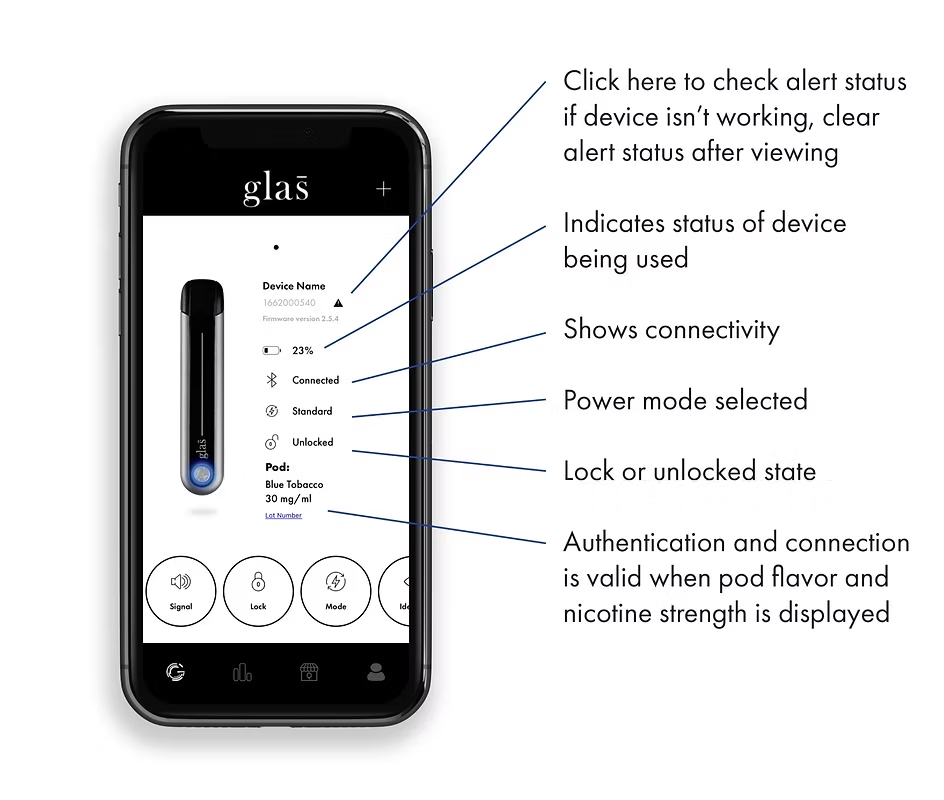
Users are required to pair the device with a Bluetooth-enabled smartphone, download an app, and upload both a selfie and images of their driver’s license before they can use it at all.
That is not all.
Once activated, the device can only be used while it remains in proximity to the paired phone, which conducts random biometric check-ins to periodically confirm the registered user is the one using the device.
Glas also built in additional safeguards beyond basic age verification.
In letters to FDA officials and HHS Secretary Robert F. Kennedy Jr., the company described embedded age and identity verification before first use, continued user authentication, counterfeit cartridge detection, cartridge identification to prevent unauthorized reuse, and the ability to deactivate the device remotely.
Glas told the FDA it ran multiple functional and age-verification tests where no underage participants could activate the device, and quoted language it attributes to the FDA’s own technical review:
“the age-gating technology combined with the marketing restrictions are expected to sufficiently mitigate the risk to youth” and that “100% of youth and young adults below the minimum age of sale failed age-verification.”
That is about as clean a result as you can get.
Fun Fact: The Glas G2 is the only FDA-authorized vape product made by a company that has never had any affiliation with the tobacco industry. Every other company on the authorized list — Logic, NJOY, Vuse, Juul — is either owned by or historically tied to Big Tobacco. Glas is an independent operation based in Los Angeles.
The FDA Authorization Saga: Politics, Glitches, and Blocked Science
The path to authorization was anything but straightforward. Glas originally submitted its Premarket Tobacco Product Application (PMTA) covering the G2 device and eight pod products back in July 2021.
That is nearly five years from submission to the May 2026 finish line.
The December 2025 Glitch
In December 2025, tobacco harm reduction advocate Gregory Conley noticed a Google Alert showing a PDF indicating the FDA had added the Glas G2 device and multiple Glas pods to its authorized list.
In an unusual twist, the update to the authorized list later that day no longer included the Glas products. The FDA attributed the weekend changes to a glitch.
Except it wasn’t really a glitch, at least not in the innocent sense. Internal FDA records tell a more complicated story.
The Science Said Yes. Senior Leadership Said No.
The Center for Tobacco Products’ Office of Science initially advised granting marketing orders for all eight Glas SKUs in December 2025.
Then, on February 17, 2026, the Office of Science Director signed off on authorizing six products, including the device, four flavored pods, two menthol-flavored pods, and one tobacco-flavored pod.
The scientists were ready to go. Then politics intervened.
Later reporting from the Wall Street Journal revealed that FDA Commissioner Martin Makary himself was responsible for blocking authorization of Glas’s age-gated flavored pods, overruling the recommendation from the Center for Tobacco Products’ scientific staff.
In March 2026, FDA authorized only the Glas G2 device and the Blonde Tobacco pod, while the four flavored pods were held back from receiving marketing granted orders.
The decision brought the total number of FDA-authorized ENDS products to 41, marking the first new authorization since Juul’s approvals in July 2025.
Trump, RFK Jr., and the Political Push
The pressure eventually came from the top, reports suggest.
White House spokesman Kush Desai described the administration and FDA as “completely aligned on expanding the availability of flavored vape products for adults, and adults only,” while Kennedy told lawmakers, “We are doing everything we can now to get American vapes on the market. People are using those vapes to quit smoking, which is something that we like.”
Whether you find that reassuring or troubling probably says something about your politics. But it worked.
May 5, 2026: The Day Fruit-Flavored Vapes Got Legal
On May 5, 2026, the FDA issued marketing granted orders for four Glas closed-pod products: Classic Menthol, Fresh Menthol, Gold (mango), and Sapphire (blueberry).
The Gold and Sapphire authorizations mark the first FDA authorizations for any vaping products in flavors other than tobacco or menthol.
Let that land for a second. After years of the FDA systematically denying every flavored vape PMTA in existence, a mango vape and a blueberry vape are now fully legal in the United States.
That is a genuinely historic shift, even with all the asterisks attached to it.
The FDA’s decision signals it is willing to authorize products in non-tobacco flavor categories where the application demonstrates that youth-use risk can be effectively mitigated through built-in device-level age-gating access restriction technology.
Fun Fact: Glas submitted its PMTA in July 2021. The FDA’s scientific staff recommended full authorization in December 2025, but political interference delayed the flavored pods by another five months. From first submission to final authorization: nearly five years.
Does Age-Gating Actually Unlock Flavors for Everyone?
This is the question the entire industry is asking. The short answer: not automatically, and not easily.
The Glas authorizations demonstrate that if an applicant can materially reduce youth-access and youth-use risk through effective device-level age-gating, the FDA may be willing to authorize a non-tobacco flavored ENDS product without requiring the same comparative efficacy showing that would ordinarily be expected for a flavored product without that technology.
But applicants with that technology still carry an especially high burden to substantiate the efficacy of those features with valid and reliable evidence from robust scientific investigations.
In plain English: age-gating helps, but you still need the science to back it up, and the actual tech to do it. None of these things are cheap.
You cannot just strap a Bluetooth chip to a pod system and expect FDA approval.
Glas spent years and significant resources on clinical studies. According to Glas CEO Sean Greenbaum in recent interviews, the robust scientific evidence and study data in the Glas G2 applications “fully align with, and likely helped formulate, the standards outlined in the FDA draft guidance for authorization of flavored ENDS PMTAs.”
Most vape companies simply don’t have that infrastructure, or those budgets. The authorization may be a proof of concept, but replicating it is a different challenge entirely.
What the Juul Lawsuit Means for Glas

Just as Glas was nearing authorization, a legal headache appeared. In December 2025, Juul Labs and its affiliate VMR Products filed a complaint with the U.S. International Trade Commission, alleging that some Glas products infringe Juul patents.
An ITC investigation is currently underway.
It’s hard not to read that filing as an attempt by the incumbent to slow a competitor gaining regulatory ground.
Whether Juul has a legitimate case is for the ITC to decide, but the timing is conspicuous, especially since the Glas G2 device is not only cheaper than JUUL’s latest product but also carries more juice and better atomizer tech.
This one is worth watching.
What This Means for the Vape Industry
Here’s the thing about this authorization: it is genuinely significant, but it is also a very narrow door.
The age-gating technology may well be what finally made the authorization politically viable, which suggests the FDA is not opening the door to many other flavored vapes. That may be a path through FDA’s maze, but it is a narrow one.
Combustible cigarettes do not require Bluetooth pairing or any of the other elements of this digital lock.
Anyone who obtains them, including youth, can use them. All you need is a lighter and an outdoor space (or, if you were a 1990s kid like me, a friend’s $600 car).
So age-gating vapes makes the safer option much harder to access than the more dangerous one which, like most things related to vaping and the FDA, is extremely odd.
That is the uncomfortable irony at the center of all of this.
The product designed to be safer than cigarettes now requires a smartphone, an app, and a selfie to activate. A pack of Marlboros requires nothing.
For independent vape brands looking at the Glas authorization and thinking “we just need to add age-gating,” the regulatory math still doesn’t quite work without years of clinical data and significant legal resources.
The big tobacco-affiliated players — Logic, NJOY, Vuse — have already submitted PMTAs for age-gated products of their own which could end up consolidating the authorized market further rather than opening it up.
If you’re new to vaping and trying to figure out where to even start with all of this, grab my free New Vapers Guide — it’s 15 years of experience in one PDF and it’ll save you a lot of confusion.
The Practical Reality for Vapers Right Now
For most people buying vapes in 2026, this changes less than the headlines suggest.
- The Glas G2 and its authorized pods remain a single product from a single brand in a closed-system that is 100% locked-down.
- The mango and blueberry flavors are available at 5% nicotine strength only, and the pods are sealed to work exclusively with the G2 device.
The marketing orders also come with strict requirements, including limiting social media marketing to Instagram users aged 25 to 54, restricting digital advertising to age-gated platforms, and requiring ongoing monitoring to prevent advertising impressions from reaching underage audiences.
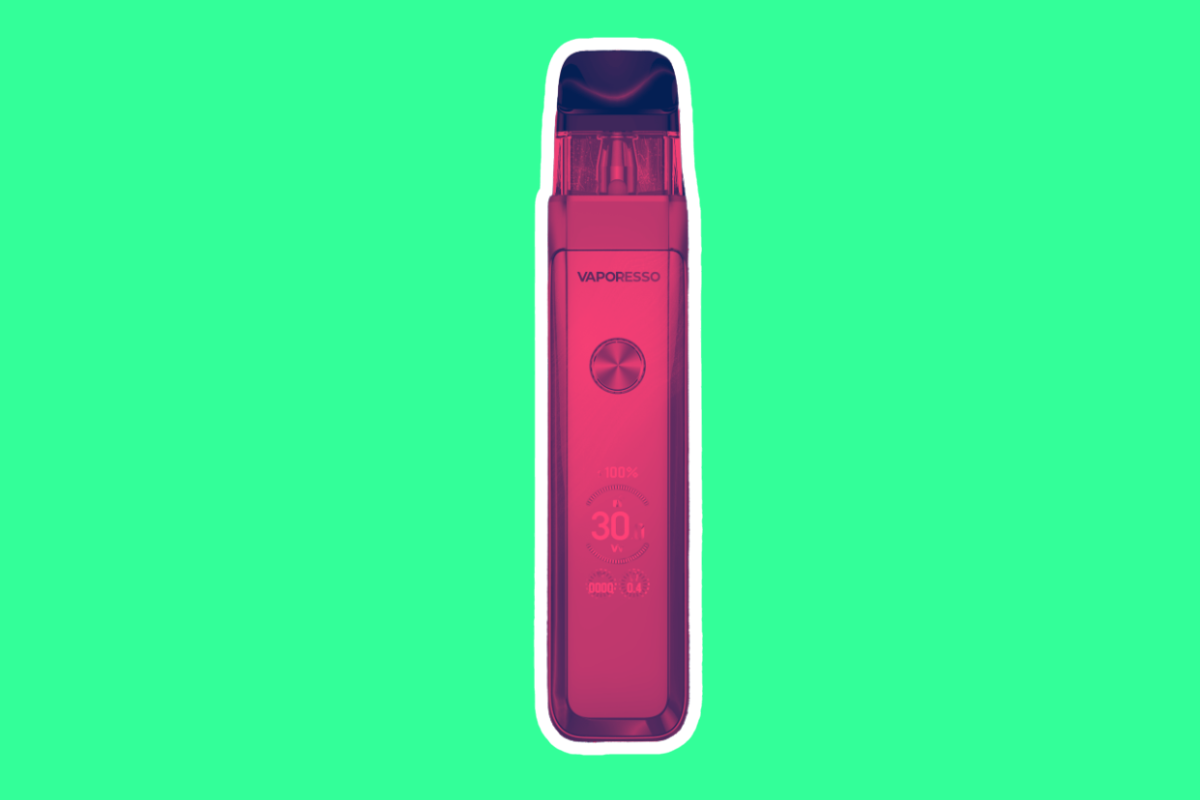
A refillable pod vape like the Vaporesso XROS Pro 2 is going to be better for 100% of people 100% of the time because it’s cheaper to run, doesn’t require you to share you life story with the government, and it’s a proven platform that delivers exactly what most vapers want.
For a wider look at where vaping technology stands right now, our Best Vapes Guide covers all the best products we’ve reviewed in the last 12 months.
Wrapping Up
The Glas G2 story is one of the most complicated and genuinely important things to happen in vaping regulation in years.
It started as a quiet authorization with no press release, got tangled in FDA internal politics, and landed on May 5, 2026, with the first FDA approval of fruit-flavored vapes ever.
That is a landmark, full stop.
Whether it actually opens the flavor gates for the broader market depends on how many companies can replicate what Glas did: years of clinical research, robust age-gating technology, and frankly, a fair amount of political pressure from the top.
For most independent brands, the majority of which are based in China, that remains a very high bar. But the precedent now exists, and that means vape companies with deep enough pockets have a proven route to one of the biggest vaping markets on the planet.
FAQ
What is an age-gated vape?
An age-gated vape is a device that uses built-in technology to verify the user’s age and identity before it can be activated. The Glas G2, for example, requires Bluetooth pairing with a smartphone, an ID upload, and a selfie before first use. It also conducts random biometric check-ins during normal use to confirm the verified user is the one vaping.
Is the Glas G2 available to buy now?
The Glas G2 device and its authorized pods — Blonde Tobacco, Classic Menthol, Fresh Menthol, Gold (mango), and Sapphire (blueberry) — have all received FDA marketing granted orders, meaning they can be legally marketed in the U.S. Availability through retailers will expand as the product gains distribution. Check Glas’s official site for current purchasing options.
Do all FDA-authorized vapes use age-gating?
No. The Glas G2 is currently the only FDA-authorized vape with built-in age-gating technology. The other authorized products — from Vuse, NJOY, Logic, and Juul — are standard closed-pod systems with no device-level age verification. Several of these companies have submitted PMTAs for age-gated next-generation products, but none have been authorized yet.
Will age-gating lead to more flavored vapes being authorized?
Possibly, but it is a narrow path. The FDA has signaled it may authorize flavored products where age-gating can demonstrably mitigate youth access risk, but applicants still need to provide strong scientific evidence from clinical studies. It is not a shortcut, it is an additional requirement on top of an already demanding PMTA process.
What is the Juul ITC lawsuit against Glas about?
In December 2025, Juul Labs and its affiliate VMR Products filed a complaint with the U.S. International Trade Commission alleging that certain Glas products infringe on Juul’s patents. An ITC investigation is ongoing. Glas has not publicly indicated plans to settle, and the outcome could affect how and where Glas products are sold in the U.S. market.
Want the latest vape news without the noise? Join The Atomized newsletter for no-fluff industry coverage the moment it happens, and follow us on Facebook for daily updates.